

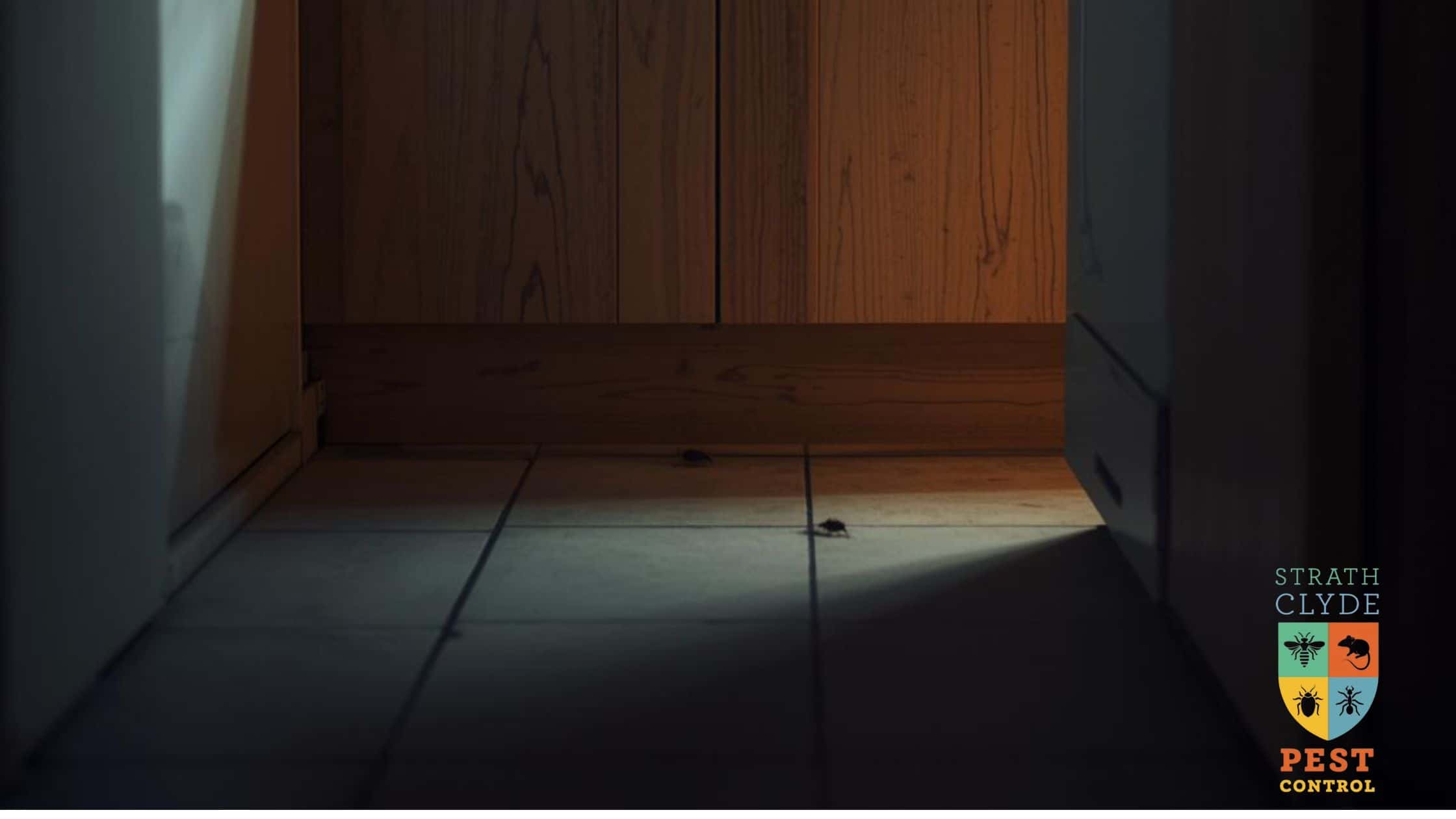
It’s happened! You saw a bug dashing across the floor and you know it, it’s a cockroach! The first time you see a cockroach, whether it’s in your house or your business, is one of those moments that really gies ye the dry boak! Most people’s first thought is, “How on earth did that wee lad get in here?” followed quickly by, “Please say it’s just one of them!” Even if you just saw one it’s normally a sign of a bigger problem, cockroaches are very good at keeping themselves hidden, so a single sighting is usually worth paying attention to. From our experience at Strathclyde Pest Control, it’s always better to take a closer look early rather than hope it scuttles off on its own.
In this article we will be explaining what a few cockroach sightings usually mean and what you can check yourself. We will also explain when and why it makes sense to get a professional inspection booked.
Should I be worried if I’ve seen a cockroach in my Scottish home?
Yes, it should be treated as a warning sign. It doesn’t mean however that you need to panic, and it really doesn’t mean your property is dirty. What it does mean is that conditions somewhere in the building suit them. So if you see one rushing about its time to take some action. Many think that these pests appear in dirty business kitchens, street food stalls and mostly other countries, but
don’t believe the movies; cockroaches are pests even here in our Strathclyde Pest Control service area.
Cockroaches hide very well and they stay close to warm and moist areas. They tend to move around at night so often go unnoticed. So when one finally shows itself, it means there is often more activity nearby that hasn’t been noticed yet. Acting early usually makes the situation far easier to deal with and can prevent it from becoming a full grown Cockroach Infestation
If you’d rather have it checked properly, you can arrange an inspection here by CONTACTING US HERE
What does finding a cockroach in your house actually mean?
Cockroach problems rarely begin with strikingly obvious signs, most build up quietly behind units, under appliances, or around pipework before anyone realises what’s going on. By the time the first one is seen, activity has often been there for a while.
In businesses, a single sighting often points to a harbourage area close by. This could be behind fridges, under sinks, around dishwashers, in stock rooms, or near waste handling areas. In homes, we most often find activity in kitchens, utility rooms, boiler cupboards, and under-sink areas where its warm and damp, this is a cockroach’s favourite place to live and work!
So whether it’s a family house, a flat, or commercial premises, “I’ve only seen one” is still enough reason to take it seriously.
First steps to take after a sighting
If you have just seen your first cockroach, here are a few sensible checks you can do straight away, these apply no matter if you live in a house, a flat, or manage a business.
Do a quick but sensible check
Have a look in the places cockroaches tend to favour:
- Kitchen cupboards, especially under the sink
- Behind or underneath the fridge, cooker, dishwasher and washing machine
- Around the boiler, airing cupboard, and any place where warm pipes run
- Bins, bin cupboards, pantries, food storage areas or food sources.
If you are at a place of business, also check near commercial dishwashers, coffee machines, warm motor units, stock rooms, and delivery areas. Don’t worry, you’re not trying to dismantle the kitchen and search all cracks and crevices, you’re simply looking for obvious signs like droppings, egg cases, or further activity.
Clean up obvious attractants
Clear away leftover food, crumbs, grease, and all food residue, especially those found around cooking areas and inside cupboards. Next, empty your internal bins and clean the bin area outside or inside. If you are in commercial setting, make sure to pay attention to the edges and hidden sections that get missed during busy shifts and regular cleans. Leftover food and water from a shift can attract cockroaches.
Deal with damp areas
Damp conditions are a huge attraction for cockroaches as even small issues like a slow drip under the sink, condensation on pipework, or water sitting behind an appliance can be enough to keep them going.
Avoid relying on sprays
Sprays can be effective and often kill what you can see, but, and it’s a big but, they rarely deal with the source of the problem. In many cases, they simply push cockroaches deeper into cracks and holes, making proper treatment harder later on.
Why seeing one cockroach is rarely “just one”
A cockroach’s special skill is staying out of sight. They are able to squeeze into tiny gaps, avoid light and usually move around at night when no one seems them, so when you see one during the day it often means the area it came from is busy or has been disturbed.
Cockroaches also reproduce steadily once they are settled which means that even if sightings are still occasional, their egg cases and nests are hidden away and can quickly turn a small issue into a growing infestation that can become costly to deal with. The earlier you deal with the “just one” cockroach warning sign the better!
Common cockroach species we see in Scotland
You don’t need to become a pest control expert and start identifying the species yourself (that’s our job!) It does help, however, to understand that not all species of cockroaches behave the same way. In Scotland, these are the ones we most often come across.
German cockroach
They are small, fast, and commonly found in heated inside environments. This species is strongly associated with kitchens and food premises and can spread quickly if conditions are just right for them

Oriental cockroach
These cockroaches are darker in colour and often linked with damp areas such as basements, plant rooms, and spaces near drains or bins.

American cockroach
These are super rare in Scotland, but not unheard of! They are larger and less common in typical homes so when they do appear, it is usually in big commercial buildings with warm service ducts or plant areas. They are often the ones you see in the American movies!

Outdoor wood roaches
Again, these roaches are quite rare, however, they are occasionally seen. They are a cockroach-like insect from outdoors that can wander inside, particularly near stored timber or garden materials. These do not usually set up indoor infestations, but repeat sightings still need checking.

Signs of a cockroach infestation beyond seeing one
People often ask what else they should be looking for. These are the signs we regularly find during inspections.
Droppings
Often described as looking like ground pepper or tiny dark grains, commonly found around cupboard edges, skirting boards, hinge corners, and behind appliances.
Musty odour
A persistent, slightly oily smell that can build up in cupboards or behind units as activity increases.
Egg cases
Small capsule-shaped cases hidden in cracks, behind skirting boards, under fridges, or near warm voids.
Shed skins
As cockroaches grow, they moult. Shed skins are sometimes found near harbourage areas.
Daytime activity
Seeing cockroaches during the day, especially more than once, usually points to established activity nearby.
What causes cockroaches in houses and businesses across Scotland?
In most cases, cockroaches are drawn in by a mix of easy access and ideal conditions rather than any single issue. Common factors include:
- Warmth from central heating, appliances, boilers, and pipework
- Moisture from leaks, condensation, or poorly ventilated areas
- Food, whether its uncovered leftovers, pet food, grease build up behind cookers or even crumbs
- Undisturbed spaces such as behind skirting board, vents, or under kitchen and other units
- Easy entry points around pipes, cracks, damaged seals, and gaps under skirting boards
In flats and tenements, shared pipe runs and communal service areas can allow cockroaches to move between units. In houses, a single warm, damp area is often enough to support activity.
Health and hygiene risks linked to cockroaches
Cockroaches are classed as a hygiene pest because they move through waste areas and then across surfaces where food is prepared or stored. This easily creates cross contamination and an area for bacteria to be shared to humans. Their droppings and shed skins and other debris can also contribute to indoor allergens.
For food businesses, this quickly becomes a compliance and reputation issue. Food Standards Scotland provides great guidance on maintaining safe, pest-free premises.
For general health information related to household pests, NHS Inform is always a useful local resource.
Why squashing a cockroach does not solve the problem
Stamping on that single cockroach (while oddly pleasing) does not deal with what caused it to be there. The hiding places, breeding areas, and conditions remain. If it is a female carrying eggs, the problem can continue regardless. If you do kill one, clean the area thoroughly and focus on inspection and prevention rather than assuming the issue is gone.
DIY steps that genuinely help (and what usually doesn’t)
Some DIY steps are genuinely useful, while others tend to waste time and money.
Good steps include:
- Keeping kitchens and food areas clean, especially under and behind appliances
- Storing food in sealed containers
- Fixing leaks and reducing condensation
- Sealing gaps around pipework and skirting boards
If you are using traps or “cockroach hotels,” monitoring them can help you to confirm their activity and show where it is most concentrated. It is important to remember that random sprays and other treatments like foggers rarely solve a cockroach infestation and can make professional treatment harder later on.
When to call in professional pest control
If you are seeing constant and repeat activity, regularly finding droppings, noticing strange odours, or running a business, it is important to get professional help. Proper pest management is about finding where cockroaches are living and dealing with them there, whether it’s stopping their breeding or exterminating them.
If you are unsure or concerned about that one sighting feel free to give us a call and we can give you professional useful advice.
If you want to know what we assess during a visit, this article explains what we look for.
What a professional cockroach inspection involves
A proper inspection goes beyond a quick look around. We check:
- Common cockroach activity zones behind units and appliances
- Moisture sources, leaks, and ventilation issues
- Movement routes and entry points around pipework and service penetrations
- Signs such as droppings, egg cases, and shed skins
- Whether activity could be spreading through shared service routes in flats or blocks
From there, we put together a treatment and prevention plan that suits the property.
Long-term prevention and keeping cockroaches out
Once the immediate issue is dealt with, prevention comes down to routine maintenance:
- Keep kitchens clean, including behind appliances
- Store food properly and manage bins carefully
- Fix leaks promptly
- Seal gaps as part of normal property upkeep
- In shared buildings, communicate with neighbours or management if issues could spread
It can easily sound like we are saying the same things over and over again, because we are! These simple steps can help prevent an infestation from returning and even prevent it from starting in the beginning.
When to contact Strathclyde Pest Control
If you have seen a cockroach, you are not overreacting by getting it checked. Early action usually means less disruption and a simpler solution, particularly in kitchens and food environments.
To book an inspection or ask for advice, CONTACT US HERE
Frequently asked questions
Should I be worried if I see a cockroach?
Yes. Cockroaches hide well, so a sighting often means there may be more activity nearby.
What should I do if I see a cockroach in my property?
Check warm, damp areas, clean up food residues, deal with leaks, and monitor for further signs. If activity continues, arrange an inspection.
What attracts cockroaches to homes and businesses?
Warmth, moisture, and access to food. Leaks, condensation, grease build-up, and hidden crumbs are common triggers.
What are the signs of a cockroach infestation beyond seeing one?
Droppings, musty odours, egg cases, shed skins, and repeat sightings, particularly during the day.
Which pest control methods are most effective?
Effective control combines correct identification, targeted treatment, addressing harbourage areas, moisture control, and prevention measures.
How can I stop cockroaches coming back after treatment?
Maintain good hygiene, fix leaks, improve ventilation, seal entry points, and keep an eye on high-risk areas like kitchens and bin stores.