

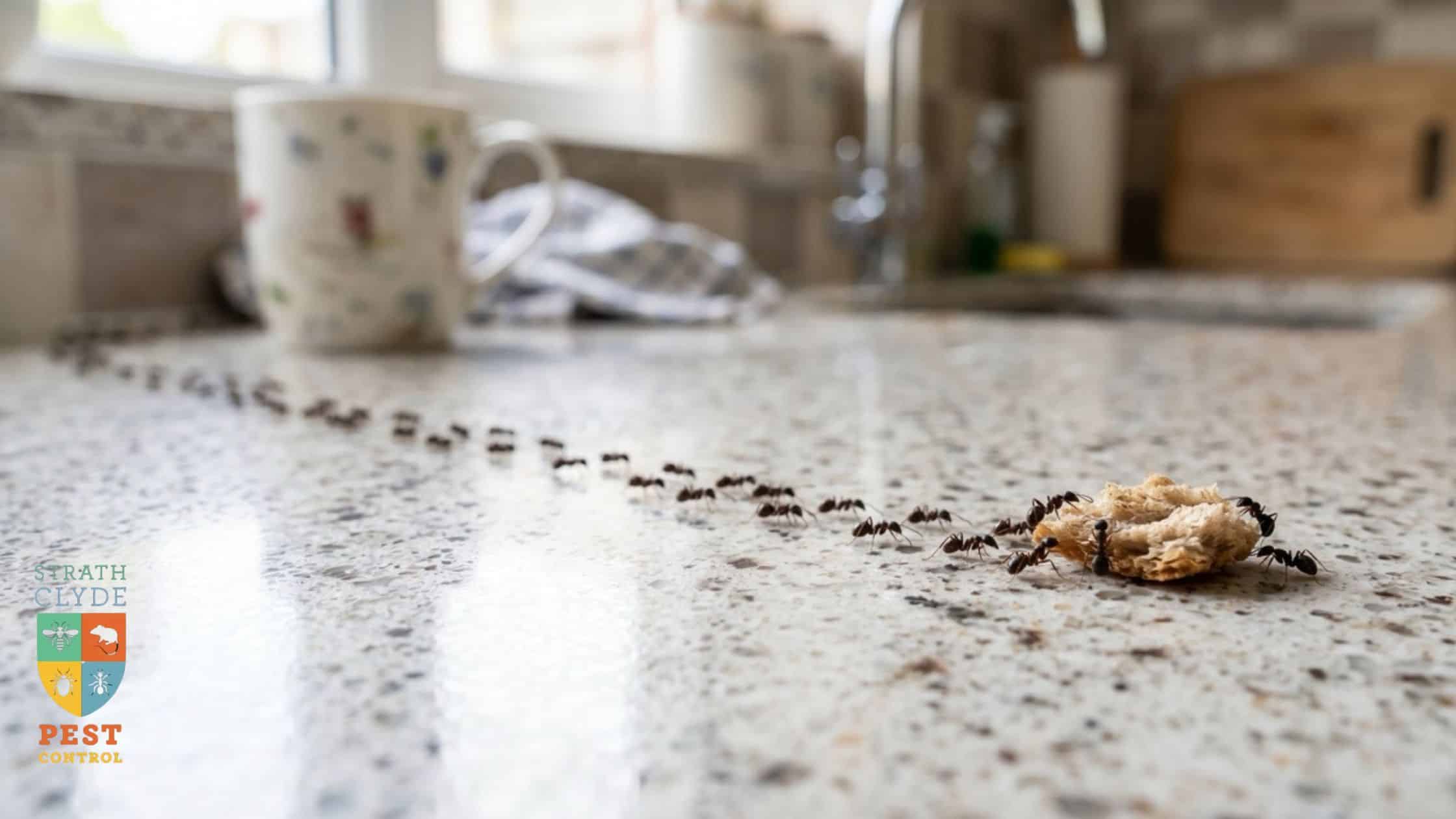
If you have ever come downstairs on a warm June morning to find a trail of ants marching across the kitchen worktop, you will know how quickly it goes from one or two scouts to what looks like a full colony invasion. It is one of the common pest calls we get across East Kilbride and Glasgow from late spring onwards, and the timing is not a coincidence.
Why Ants Come Inside in June
Ants do not come indoors because they are lost. They come in because a scout has found something worth reporting back about — usually food or water — and left a pheromone trail for the rest of the colony to follow. By the time you are seeing a visible ant trail across your kitchen floor, that scent trail is already established and workers are following it back and forth in both directions.
June is when this peaks for a few reasons. Warmer temperatures speed up ant activity significantly. Nesting activity is at its highest as colonies grow through early summer. And dry spells — which Glasgow and East Kilbride get occasionally even in June — push ants indoors looking for moisture. A dripping tap, condensation around the fridge, a damp patch under the sink — any of these will do. Ants are not fussy about their water source, they just need one.
As for which ants you are likely dealing with, it is commonly the black garden ant in kitchens across our service area. Pavement ants and carpenter ants do turn up occasionally, particularly in older properties with timber floors or ageing woodwork, but they are less common. The black garden ant is the one most people recognise — small, dark, and appearing in numbers seemingly out of nowhere.
They are not going to sting you. But they do pick up bacteria as they travel across floors, drains and surfaces before walking across your worktop or into open food. Research has found ants can even carry coliforms and in some cases E. coli, which is worth knowing when you are deciding how seriously to take a kitchen infestation.
How Ants Are Getting In
They do not need much of a gap. Cracks around skirting boards, spaces where pipes come through walls, window frames that do not sit quite flush, gaps around utility cables — these are the kinds of structural entry points that ants find and use consistently. In older Glasgow tenements and Lanarkshire properties there is often more than one route being used at the same time, which is part of why the problem keeps coming back even after treatment.
They also come in through open doors and windows during warm weather, which is harder to prevent entirely but less of a problem once you have dealt with what is attracting them inside in the first place.
What to Try Yourself First
If you have caught it early and are dealing with a small number of ants rather than an established trail, there are some things worth trying before calling anyone.
Cleaning the ant trail is the first step. Ants follow pheromone trails, so disrupting and removing the scent trail is more useful than just killing the ants you can see. A white vinegar and water mixture — roughly one to one — wiped along surfaces and floors where ants are travelling will break down the pheromone trail and deter them from using the same route again. It will not solve the problem on its own but it disrupts the immediate activity while you deal with the source.
Food storage is the other big one. Ants are incredibly good at finding food sources — crumbs under the cooker, unsealed packets in cupboards, fruit left out on the side, pet food bowls left down overnight. Moving food into sealed food storage containers and keeping surfaces clean removes the reason they came in. Without a food source to report back, scouts stop returning and the trail loses its purpose.
Ant powder applied around entry points and along skirting boards can be effective for light ant infestations. It works slowly — worker ants carry it back to the colony rather than dying immediately — which is actually how it should work. Some shop bought ant killer powders or bait stations are a reasonable first step for a small infestation.
DIY ant traps and liquid bait are another option worth trying before calling anyone in. Ant traps work by luring worker ants in with bait they carry back to the colony — this is slower than a spray but more effective at reaching the ant nest. Diatomaceous earth is worth knowing about if you have not come across it before — it is a fine powder you can pick up from most garden centres, and it works by damaging the exoskeleton of ants that walk through it. Not the most glamorous solution but it does the job around entry points without chemicals.
Baking soda mixed with powdered sugar gets mentioned a lot as a home remedy. Some people find it works, others do not notice much difference. It is cheap enough to try.
If you would rather avoid anything chemical altogether, essential oils like peppermint oil and tea tree oil can disrupt ant trails when wiped onto surfaces. Coffee grounds, cinnamon and cayenne pepper do something similar — they interfere with the scent trails ants use to navigate, which breaks the route without killing anything. These natural repellents work better as a deterrent than a cure, but alongside proper food storage and a clean kitchen they can be enough to keep minor activity at bay. None of these are a permanent fix but combined with good kitchen hygiene they can be enough to deter minor ant activity.
When DIY is Not Enough
The problem with most DIY ant control is that it deals with the workers you can see without touching the ant colony itself. The queen ant and the nest remain undisturbed, and as long as that is the case the infestation will keep coming back.
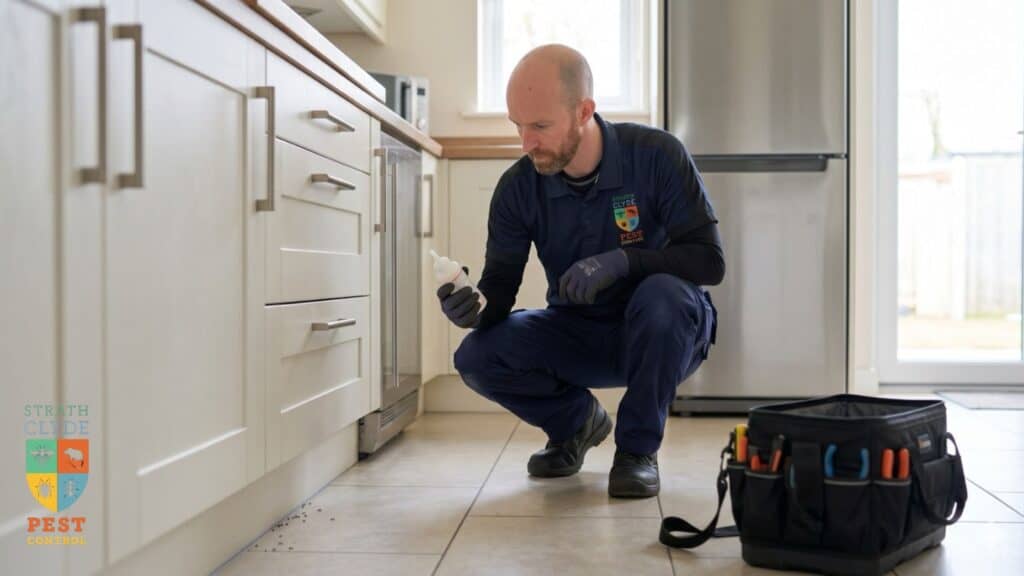
If you are dealing with a recurring ant problem — one that keeps reappearing despite cleaning and treatment — or if the numbers are significant enough that you are seeing ants across multiple areas of the kitchen, it is worth getting a professional involved. A visit from qualified pest control technicians will identify where the nest is located, which entry points are being used, and apply treatments that target the colony directly rather than just the foraging workers.
Ant infestations that get into wall cavities or under flooring are particularly difficult to deal with without professional treatment. The same goes for any situation where over the counter ant powder has been tried repeatedly without lasting results.
Keeping Ants Out Long Term
Once an infestation has been dealt with, a few simple habits go a long way towards stopping them coming back. Sealing cracks around skirting boards and pipe entry points removes the structural routes they use. Keeping compost bins away from the house and not leaving food crumbs or food sources accessible overnight reduces what draws them in. Regular cleaning under and behind appliances — particularly the cooker and fridge — is the kind of thing that makes a real difference because those are the spots that accumulate crumbs and spillages that ants find long before you do.
If you are seeing ant infestations in your kitchen across East Kilbride, Glasgow or Lanarkshire and want some advice on whether it needs professional treatment, get in touch with our team, or learn more our our Ant Control Service Page. We will give you an honest assessment and only recommend treatment if it is actually needed.

