
Are bumblebees dangerous? Every June the calls start coming in. Someone has spotted something buzzing around the garden shed, or they can hear something in the loft, and they are convinced it is wasps. More often than not, it turns out to be bumblebees. Completely understandable — but the two situations are quite different, and what you actually do about it depends on which one you are dealing with.
Bumblebee or Wasp? Here is How to Tell
The easiest way to tell a bumblebee from a wasp is the hair. Bumblebees are round, slow and covered in fuzz — wasps are slim, smooth and tend to dart about rather than bumble. If it looks like it is wearing a little jumper, it is almost certainly a bumblebee.
Colour is less reliable than people think. Both can be black and yellow, and some bumblebees are mostly black with very little colour at all. A black bumblebee is still a bumblebee — the fuzz is the giveaway, not the markings.
Honeybees sit somewhere in the middle. Smaller and slimmer than bumblebees, but still with some hair. They are worth mentioning because people sometimes confuse all three, and a honeybee situation is different again — if you think you have a honeybee colony, the best first call is a local beekeeper rather than pest control.
If you are not sure what you are looking at, a photo from a safe distance is usually enough. Give us a call and we can point you in the right direction, even if the answer turns out to be nothing to worry about. If it does turn out to be wasps, our wasp control page explains what we do from there.
Tree Bumblebees — the Species That Causes the Most Calls
Most bumblebees nest in the ground — old rodent burrows, patches of sandy soil, the base of a hedge or a compost heap. The tree bumblebee is the exception.
Unlike other species, tree bumblebees nest up high. Bird boxes, gaps under roof tiles, soffits and loft spaces are all common nest sites. If you have got buzzing coming from somewhere in the roof and you cannot figure out what it is, there is a reasonable chance it is a tree bumblebee colony that has found its way in through a small gap somewhere.
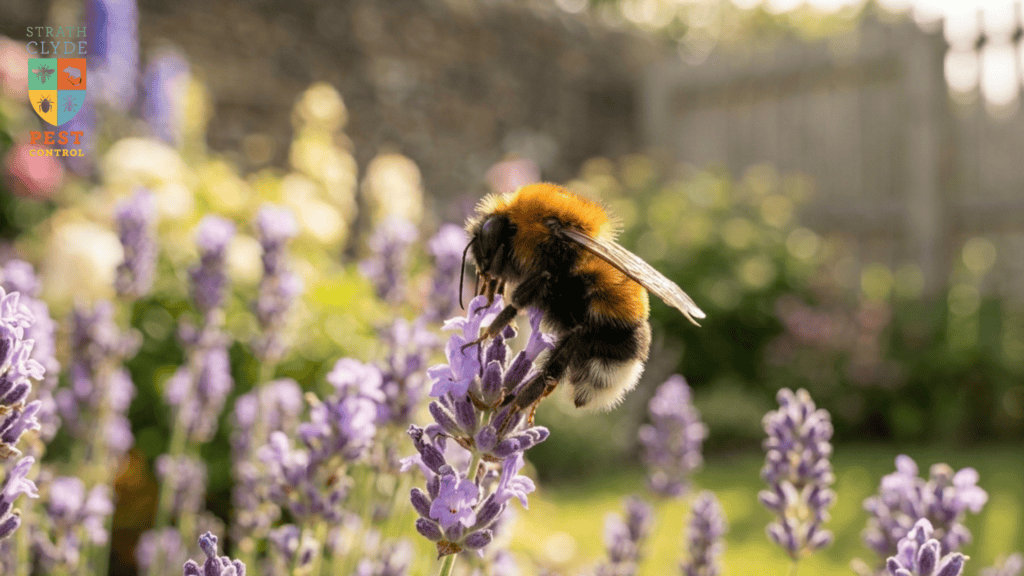
Tree bumblebees are reasonably easy to spot once you know what to look for. They have a ginger-brown top section, a black body and a white tail — pretty distinctive once you have seen one. They tend to be the species that causes the most concern because of where they nest, but the same advice applies as with any other bumblebee. More on that below.
Are Bumblebees Dangerous to Humans and Pets?
Not really, no. The Bumblebee Conservation Trust puts it well — they are about as unbothered by humans as an insect can be. A sting is possible if one gets trodden on or someone tries to handle it, but walking past a nest in the garden? They genuinely could not care less.
The stinger thing is worth knowing about. A honeybee has a barbed stinger, so when it stings you the stinger stays behind along with a dose of bee venom — which is why a honeybee usually dies after stinging once. A bumblebee’s stinger is smooth, so it keeps it. That does mean it could sting more than once in theory, but in practice it would take a lot of provocation to get there. Male bumblebees cannot sting at all, which is worth remembering when you see them bumbling around the flower bed.
For most people a sting causes some pain and swelling for a day or so. In around one in a hundred people it can trigger a more serious allergic reaction, similar to a reaction from honey bee venom or a wasp sting. If anyone in the household has a known allergy, it is worth factoring that in when you are deciding what to do about a nearby nest — but for most households, a bumblebee nest in the garden is not something that needs urgent action.
Why Are Bumblebees in Your Garden?
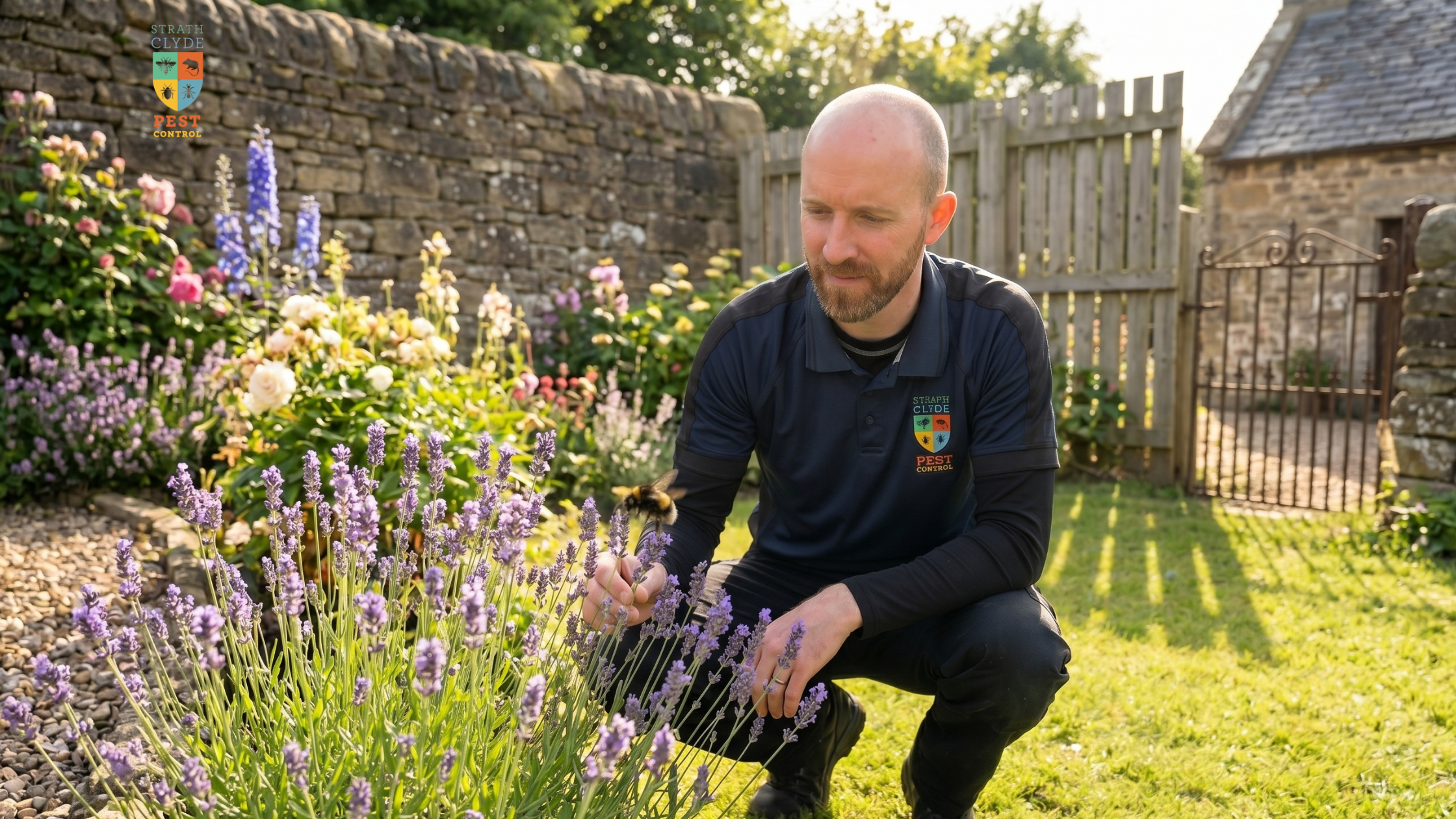
Because your garden is doing something right, honestly. Lavender, foxgloves, fruit bushes — anything in flower through June is exactly what they are looking for. Nectar and pollen is what keeps the colony going, and the worker bees spend their days finding it rather than looking for trouble.
The size of a bumblebee colony surprises most people. Even a busy one rarely has more than 150 bees in it — compare that to a honeybee colony or a well-established wasp nest later in summer and it is quite modest. The buzzing tends to make it sound bigger, particularly when bumblebee nests are tucked inside a wall cavity or roof space where the sound bounces around.
It starts with a single queen in spring. She finds somewhere to set up, lays her first eggs, and the worker bees that hatch from those take over the foraging. She stays in the nest laying more eggs while they go out and collect food. As summer goes on she switches to producing new queens and reproductive males, who head off to mate. Come autumn the whole colony winds down naturally — the new queens find somewhere to hibernate, and everything else dies off.
Should You Do Anything About a Bumblebee Nest?
In most cases, no. The nest will be gone by late summer, the bees are not looking for a fight, and removing them is harder than most people expect — there is no simple spray-and-done approach for bumblebees the way there is for wasp nests.
If the nest is somewhere out of the way — under the shed, in a corner of the garden, somewhere the kids and the dog do not go — the straightforward advice is to leave it.
A handful of garden canes pushed into the ground around the nest, with a bit of temporary barrier tape between them, is genuinely often enough. It just reminds people to walk around rather than through. Bumblebee numbers have taken a real hit over the years — habitat loss being the main culprit — so most pest controllers and conservation groups say the same thing: if you can leave it, leave it. An undisturbed nest through summer is actually doing your garden a favour.
Where it gets more complicated is when the nest is somewhere you cannot reasonably avoid — right next to the back door, inside a roof space that needs access, that sort of thing. It is also worth being sure you are actually dealing with bumblebees before deciding to do nothing, because a wasp nest in the same spot is a completely different problem. Our bees vs wasps guide is worth a look if you want to double check before calling anyone.
We work across East Kilbride, Glasgow and Lanarkshire, and part of what we do is help people work out what they are actually dealing with before jumping to any conclusions. Sometimes the answer is do nothing. If it does turn out to be something that needs treating, we will tell you that too. Either way, feel free to get in touch and we will point you in the right direction.