

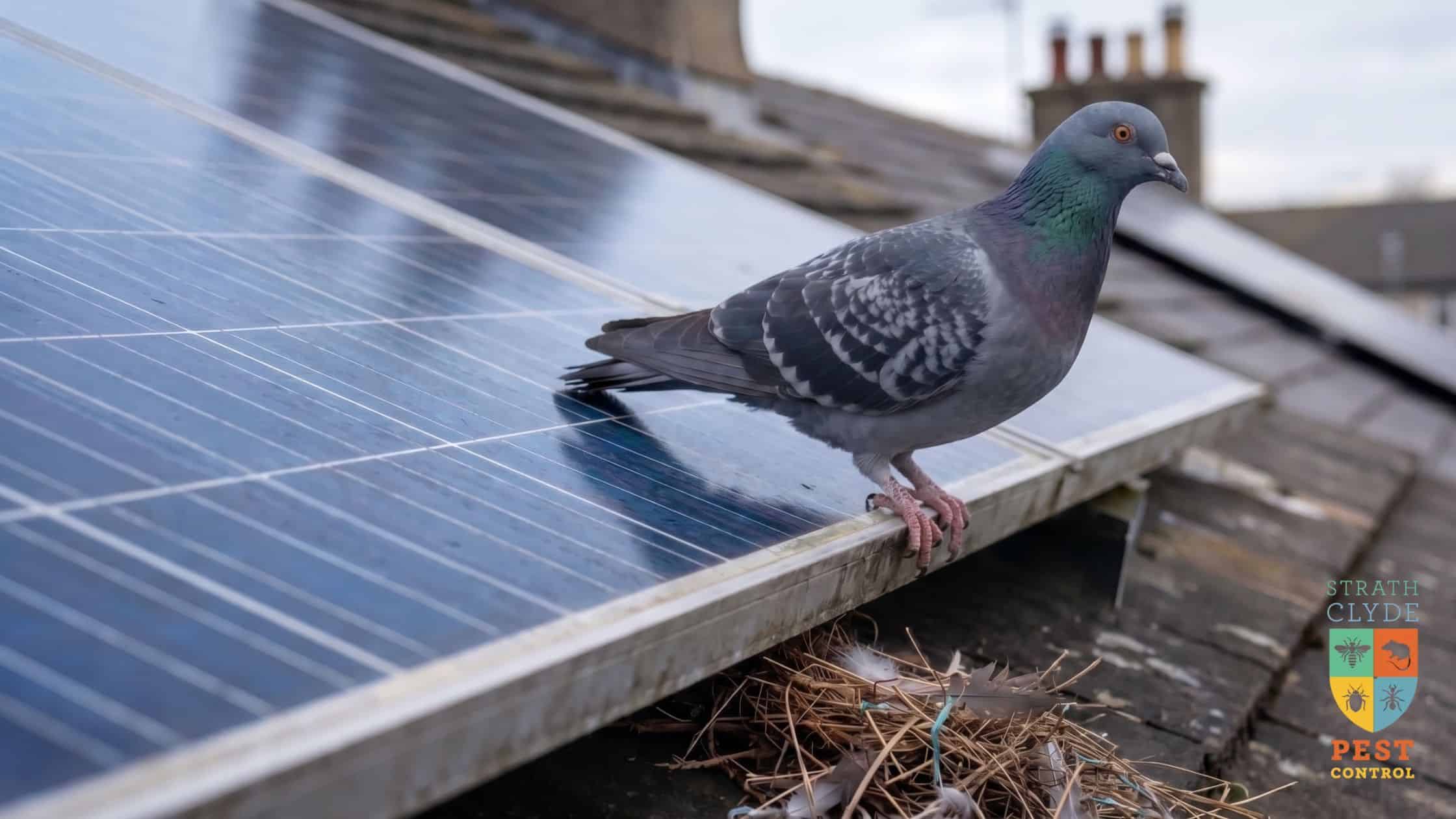
Birds nesting under solar panels is a problem that catches a lot of homeowners off guard — and it is becoming more common across East Kilbride, Glasgow and the wider Lanarkshire area. Solar panels have become a common sight in our area. They are a solid investment — lower energy bills, reduced carbon footprint, better long-term value on your property. But there is one problem that catches a lot of homeowners off guard, usually a year or two after installation.
Birds — pigeons especially — have worked out that the gap between your solar panels and the roof is just about the most comfortable nesting spot going. Sheltered from the famous Scottish weather, raised off the ground, and largely undisturbed. From a bird’s point of view, it is the ideal spot to make their new home.
Why solar panels attract birds in the first place
The gap created between a solar panel array and the roof tiles sits at just the right height and depth for birds to nest in. It is dark, protected from wind and rain, and warm from the heat the panels generate. Pigeons in particular are drawn to elevated urban spots, and these rooftop solar installations give them exactly what they are looking for.
The problem then multiplies because once one pair of birds find a spot and nests there, others follow. Nesting material builds up, droppings accumulate, and what starts as one bird becomes an established colony surprisingly quickly. In urban areas across Glasgow and East Kilbride this has become a genuinely common issue, and it tends to get worse the longer it is left.
What birds nesting under solar panels actually does to them
Most people assume birds on the roof are just annoying. The reality is they cause damage that adds up quickly, and solar panels make it worse because the problems are hidden until they are already serious.
Bird droppings are acidic enough to corrode the panel surface over time. More immediately, even a partial covering blocks sunlight from reaching the cells — and because the gap under the panels gives birds a permanent nesting spot, they keep coming back to the same location. That means droppings accumulate on top of the panels consistently, and the longer it goes on, the more it affects your solar output. A recent study noted that dirt and soiling can reduce panel output by up to 60%.
The wiring underneath is worth thinking about too. Nesting birds pull at cables and insulation as they settle in, and over time this causes real damage to the PV system. In some cases it creates fire hazards — not something most people expect from a bird problem, but it happens more than you would think. Wiring faults that develop this way tend not to be covered under manufacturer warranties once bird activity is identified as the cause, which means the repair bill lands entirely with you, the homeowner.
Water damage is the other thing that creeps up on people. Nest material and gutter debris pack together and trap moisture. In our beautiful Scottish climate we know this is not a small thing! Blocked gutters and damp working its way under roof tiles can cause structural damage over several seasons, and by the time it shows up it has usually been building for a while.
What the law says about wild birds
It is worth knowing, before anyone attempts to deal with this themselves, many wild birds and their active nests are protected under the Wildlife and Countryside Act 1981. Removing or disturbing an active nest during nesting season can be a legal offence. A qualified pest control specialist will know exactly what can and cannot be done and when, which is another reason this is not a job for a Saturday afternoon with a ladder.
How solar panel bird proofing actually works
The most effective long-term solution is a bird-proofing mesh fixed around the perimeter of the solar panel array. A galvanised mesh or bird mesh barrier runs along the solar edge and closes off the gap between the panels and the roof completely. Once that is in place properly, pigeon proofing the rest of the roofline becomes much more straightforward.
Bird spikes along ridge lines can help deter roosting, though mesh is generally the more thorough fix for panels specifically. Bird netting works in more complex roof configurations where mesh is harder to fit neatly.
Chicken wire comes up sometimes as a cheaper DIY option. It is not really worth it — it corrodes quickly, loses shape, and leaves gaps within a season or two. Properly fitted galvanised mesh kits with specialist fixings are built to last and will not interfere with your panels or your warranty the way a badly fitted DIY job can.
The most effective way to deal with birds nesting under solar panels long term is a bird-proofing mesh fixed around the perimeter of the array.
When is the right time to get it done?
Ideally before birds move in — but don’t worry, most people get in touch after they have already noticed activity. That is fine, it can still be sorted. If nesting is already underway the timing needs to work around the legal protections mentioned above, and a pest controller will advise on that.
From a cost perspective, earlier is always better. The proofing itself is a straightforward job. Solar panel repairs, wiring replacement and accumulated structural damage are a different matter entirely.
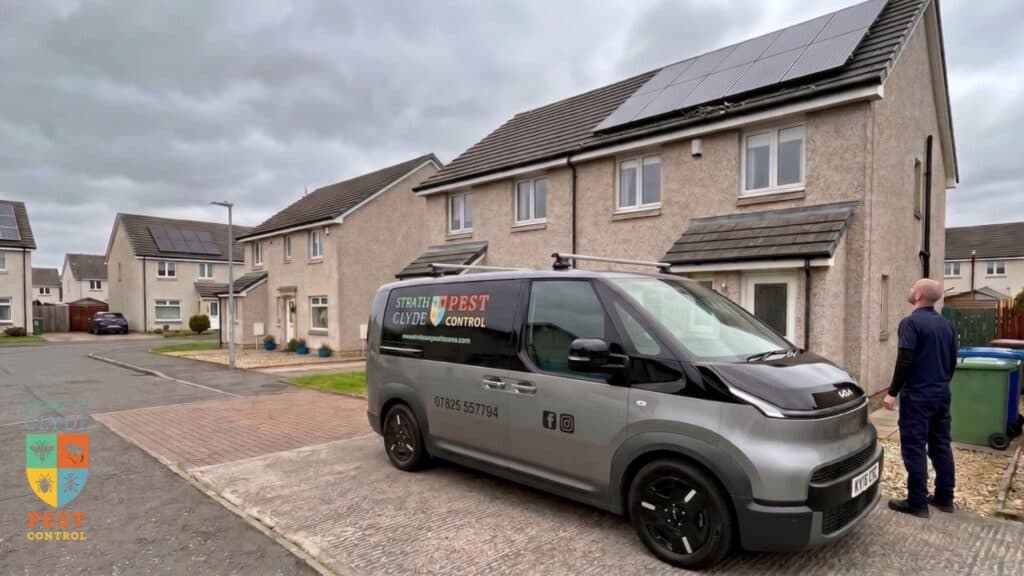
We cover East Kilbride, Glasgow and across Lanarkshire
At Strathclyde Pest Control, we have years of experience dealing with all different types of pest problems including pigeons. If you have noticed pigeons on your roof or can hear activity under the panels, get in touch and we will take a look. We will assess what is there, advise on the right approach, and help you solve your pigeon pest problem.
Do not wait until the damage shows up on your energy bill or in your roof. Get it sorted early.

