

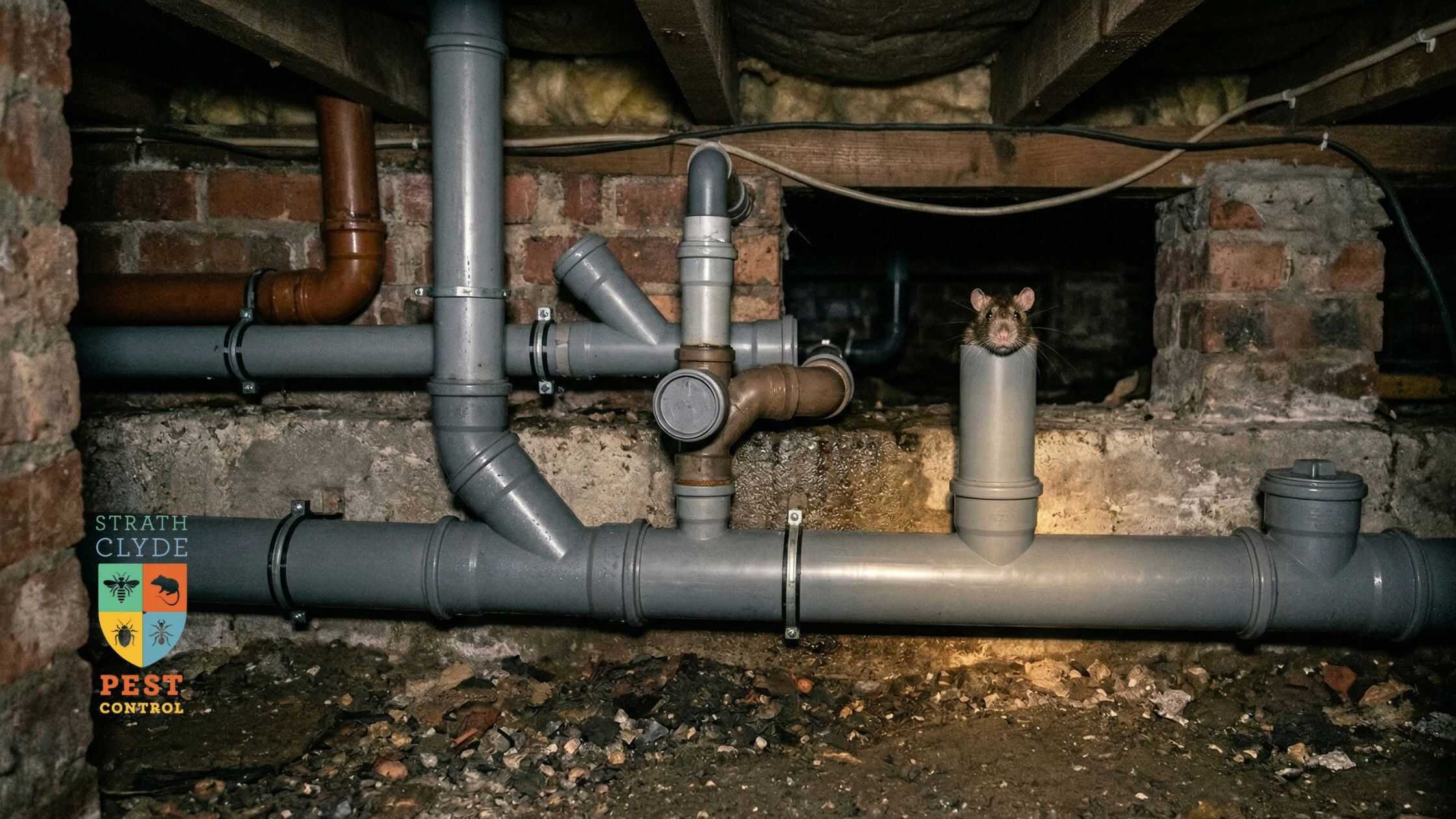
Many homeowners ask: can pests come up through drains in Scotland? It’s a question we hear quite a lot, especially from homeowners around East Kilbride and Glasgow.
Can pests actually come up through drains?
It sounds a bit far-fetched at first, but the honest answer is yes, it can happen. Not every day, and not in every home, but when it does there’s usually a reason behind it rather than it being random.
In most cases, it comes down to something not quite right within the drainage system.
What Pests Can Come Through Drains?
When people ask this, they’re usually thinking about rats straight away. And to be fair, that’s the main one. Rats in drains are very common because they naturally live in sewer pipes and underground systems. If you’re dealing with this already, you can read more about how we handle it here: Rat Control in East Kilbride
But they’re not the only pests linked to drains. Depending on the conditions, you might also see:
- Drain flies (sometimes called filter flies or sewage flies)
- Small insects feeding on organic matter
- Occasionally cockroaches in certain environments
- Most of these are drawn to damp or wet conditions, food residue and build-up inside the drainage system.
If you’ve noticed pests elsewhere in the house as well, it can sometimes be connected. We looked at this in more detail here: Ratmageddon? Why Rat Problems Are Increasing in Glasgow
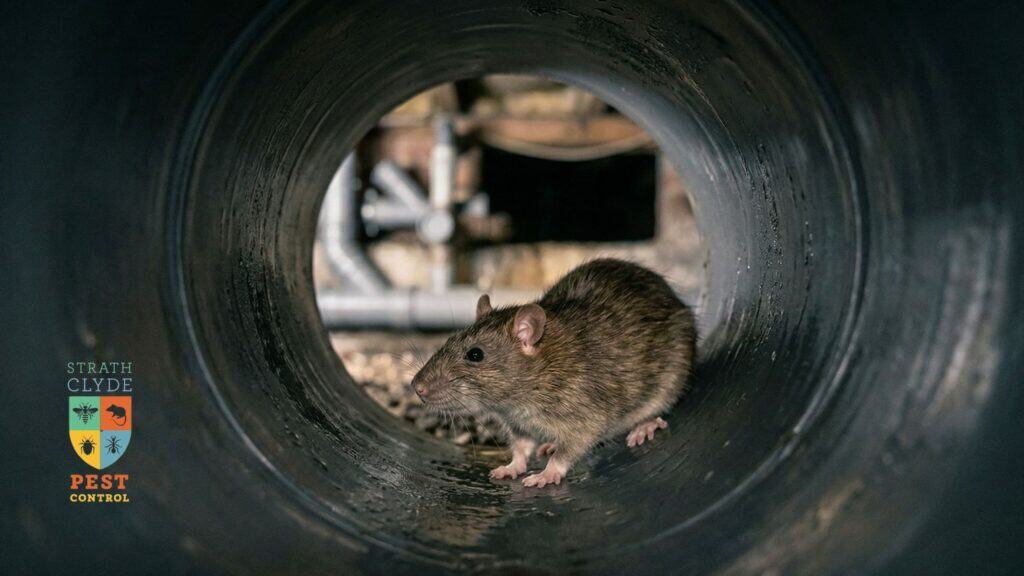
Can Pests Come Up Through Drains in Scotland? How do they Get In?
In a properly sealed drainage system, pests shouldn’t be able to get into your home. The system is designed to keep everything contained and flowing away from the property.
Problems start when something changes. We often find issues like:
- Cracked or damaged drain pipes
- Loose joints or poorly sealed pipework
- Faulty drain traps or problems with the toilet’s U-bend
- Damaged or missing drain covers outside
- Older pipework shifting over time
These create what are known as “entry points”. Once there’s access, pests can move from sewer pipes into the drainage system and eventually into the building. In parts of East Kilbride, especially with older properties, drainage defects are one of the more common causes.
What Causes Drain Problems in the First Place?
A lot of the time, it’s not one single issue. It builds up over time. Food waste, grease and organic debris can collect inside pipes, especially in kitchens. This can lead to blockages and create a perfect environment for insects like drain flies. On top of that, general wear and tear, ground movement or older materials can weaken the system. Once there’s a small fault, it doesn’t take much for it to become a bigger issue.
Can Rats Come Up Through Toilets?
This is the one people always ask about. You see it in the movies but is it true?
Yes, technically rats can come up through toilets. However don’t forget it’s super rare, but it does happen.
Normally, features like drain traps and the U-bend are there to stop gases and pests coming back up. When everything is working properly, they do that job well. But if there’s damage in the system or a missing barrier further down the line, it can allow movement through the pipework.
The British Pest Control Association has guidance that highlights how drainage defects are a key factor in rodent access. Look at point 3. Check your drains!
Signs You Might Have a Drain-Related Pest Problem
Most of the time, there are early signs before anything serious develops. You might notice things like unusual smells coming from sinks, repeated sightings of insects around plugholes, or scratching sounds near pipework and floorboards.
Outside, it can sometimes show up around drain covers or even near a manhole cover if there’s a deeper issue in the system. On their own, these signs might not mean much. But if you’re seeing a few of them together, it’s worth taking a closer look.
What You Can Do
There are a few simple things that help reduce the risk.
Keeping drains clear of food waste and avoiding grease going down sinks makes a big difference. Making sure drain covers are secure and keeping an eye on slow drainage or recurring blockages also helps.
Some people try boiling water or cleaning solutions. These can help with surface build-up, but they won’t fix structural issues inside the drainage system. If the problem keeps coming back, that usually tells you there’s something deeper going on.
How the Problem Is Properly Identified
When it’s not obvious where the issue is coming from, this is where proper inspection comes in. In some cases, a CCTV drain survey is used to look inside the pipework. This allows drainage specialists to spot cracks, blockages or entry points that wouldn’t be visible otherwise. It’s often the quickest way to confirm whether pests are actually coming through the drainage system or not.
Why DIY Solutions Often Don’t Work
This is where a lot of people get stuck. DIY treatments tend to focus on what you can see, smells, insects or the odd sighting. But if the root cause is damaged pipework, missing rodent barriers or something like faulty drain traps, those fixes won’t last. Without dealing with the actual entry point, the problem usually returns.
When to Contact Pest Control
If you’re seeing repeated pest activity linked to drains, or something just doesn’t feel right, it’s worth getting it checked. The earlier it’s looked at, the easier it is to deal with. Once pests settle in and start using the same routes, it becomes more difficult to manage.
At Strathclyde Pest Control, we deal with this type of issue across East Kilbride and Glasgow regularly. If you’re unsure what’s going on, you can contact us here: Contact Strathclyde Pest Control
Final Thoughts
So, can pests come up through drains in Scotland? Yes, but it’s usually a sign that something in the drainage system needs attention. For most homes, it’s not something you’ll ever deal with. But if there are faults in the system, it can happen. The key thing is catching it early. Once the cause is identified, it can be sorted before it turns into a bigger problem.

