

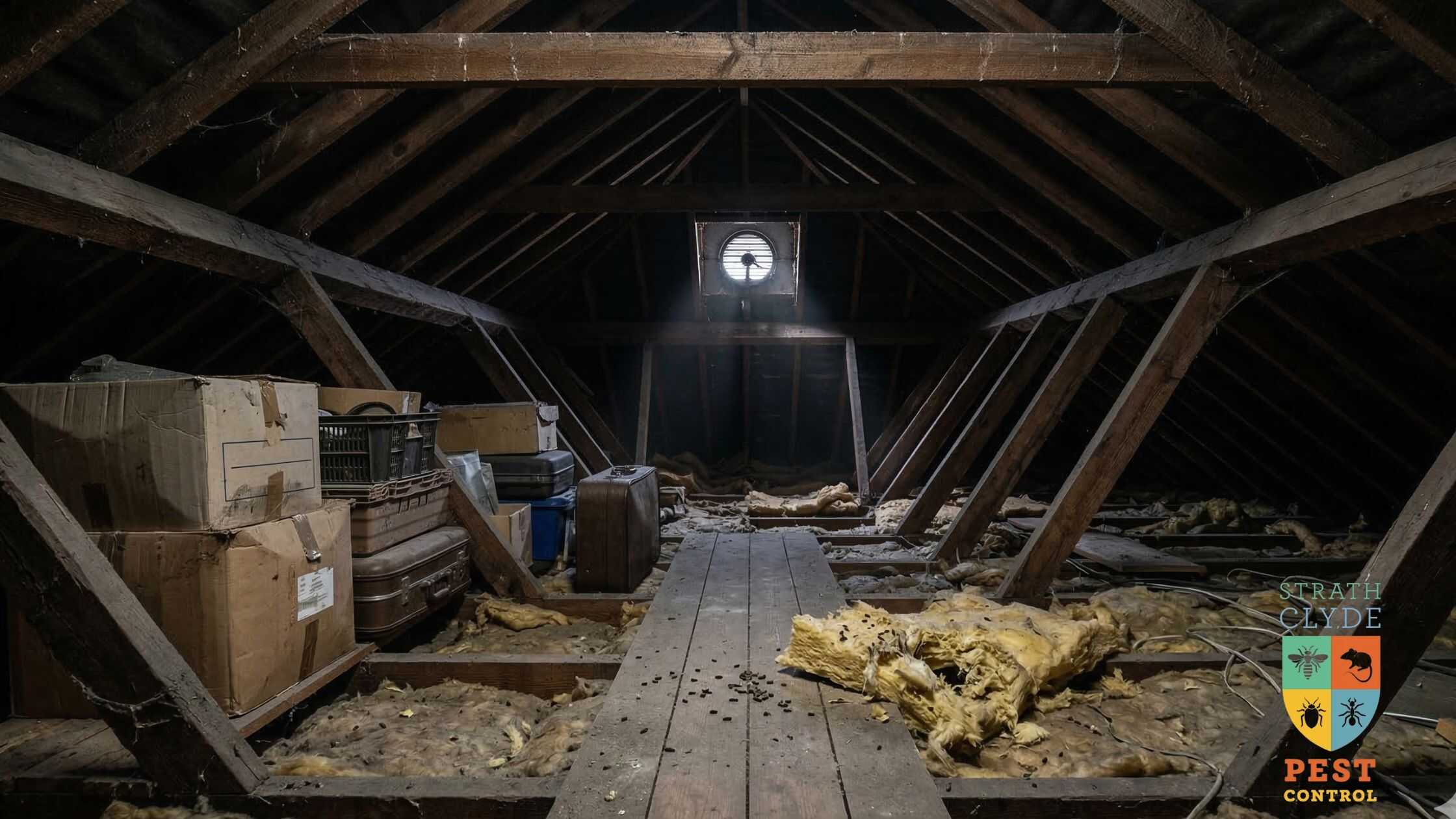
If you’ve started hearing strange noises in the loft such as scratching, scurrying or the odd bump this time of year, you’re not alone. Every spring we get a new surge of calls from homeowners around East Kilbride and Glasgow asking the same thing: “What is that noise in my loft?”
Sadly this time of year the answer is most likely “some sort of pest activity”. As the weather starts warming up from the depths of the winter cold, animals and pests that have been sheltering become much more active, kind of like us humans! These pests start moving around, searching for food, and in many cases preparing nests for breeding season.
You’d be surprised how often we see this around East Kilbride and even central Glasgow. What was a quiet loft in February suddenly becomes filled with strange noises you don’t recognise by March or April. This is often due to pests like rodents or squirrels becoming active again.
The good news is that strange loft noises usually have a clear explanation once you know what to listen for. When customers in East Kilbride call us about strange noises in the loft, the cause is almost always some type of pest activity. Our blog today will help you identify what’s going on in your loft and what you should do!
Why Strange Noises in the Loft Are Common in Spring
Lofts and roof spaces make ideal shelter for wildlife and rodents. They are warm, dry and usually undisturbed for long periods. During the winter season pests often stay relatively quiet to conserve energy. However, once spring arrives their behaviour changes quite a bit.
Rats, mice and squirrels all become more active and start noisily scurrying around as they search for food and nesting materials. Birds may begin exploring roofs looking for sheltered areas to nest in and insects such as bees can also become active around roof spaces and outdoor vents.
Most of the time the animals gain access to your home or business through small entry points around the roof. After a long winter full of storms and snow these entry points can easily increase thus giving free rein for pests to enter your premises.
Common Pests That Cause Loft Noises
Different pests create slightly different roof noises. After dealing with these problems for years around Glasgow and East Kilbride you start to recognise the patterns quite quickly.
Rats and Mice
Rodents are probably the most common causes of loft noise in our service area of East Kilbride and Glasgow. Mice, for example, tend to create light scratching or scurrying sounds, often during the night. The noise usually moves quickly across the loft space as they run along beams or insulation.
Rats, however, are heavier and louder. People often describe it as scratching followed by a slow thumping movement across the ceiling.
Another giveaway is gnawed wires or smear marks along wooden beams. Rats constantly chew to keep their teeth trimmed, which can lead to electrical wiring damage and insulation damage over time.
If you suspect rodents, our local rat control service in East Kilbride or mouse control service can help identify and remove the problem.
Squirrels
Squirrels are another common cause of roof noises, but it’s more common to hear them during the day. That’s because unlike rats and mice, squirrels are mostly active during daylight hours. Our customers often hear loud running, jumping or even rolling sounds above the ceiling.
It’s important to remember that they are strong animals and can cause structural damage to loft insulation, fibreglass lagging and wooden beams while building nests. Squirrels can even make their own entry points. What was a small gap in your roof tiles or near vents has been chewed by squirrels to help them make their way inside.
If squirrels are involved the solution usually involves proper exclusion techniques to block those entry points once the animals are safely removed. You can read more about this on our squirrel pest control page.
Birds in the Roof
Birds sometimes nest inside roof cavities, especially around damaged vents or chimney areas.
Many customers first notice it early in the morning with fluttering or light scratching sounds. You might also hear chirping if chicks are present.
Bird nesting materials can block vents and create mess in the loft space over time. In some cases bird netting or other exclusion measures are required to stop repeat nesting.
Bees and Other Insects
Spring is also when bees become active again.
A steady humming sound in the roof area can sometimes indicate a bee colony forming inside wall cavities or loft spaces.
Bees are endangered species in the UK, so these situations need careful handling. The British Pest Control Association offers good advice on managing pest situations safely. Our website is also full of useful information on how to identify if it’s a bee or a wasp and when you need to call pest control
How to Tell What Pest Might Be in Your Loft
A few small clues can help identify the animal causing attic noise.
Timing is one of the biggest indicators. Noises at night often suggest rats or mice. Noises during the day usually point towards squirrels or birds.
The type of sound also matters. Light scratching tends to be mice. Slow heavy movement can be rats. Fast running or jumping often indicates squirrels.
Sometimes customers in East Kilbride first notice droppings or nesting materials when they go into the loft for storage. Other times the only sign is the noise itself.
Most people only realise there’s a problem when it wakes them up at night.
Why Ignoring Loft Noises Can Lead to Bigger Problems
It can be tempting to ignore the sound for a few days and hope it disappears. In reality pest activity rarely resolves itself. Once animals find a sheltered roof space they usually stay and breed. Rodents are a great example. They can multiply quickly; it’s important to remember that rats are social animals and where there is one there are often several nearby.
Beyond that there is the physical damage to consider. Rodents can chew electrical wiring, squirrels can tear up insulation, and birds can block ventilation points in the roof. Over time this leads to structural issues that are far more expensive than dealing with the pest early.
You’d be surprised how often we see minor pest activity turn into major loft damage simply because it was ignored for too long.
What To Do If You Hear Noises in Your Loft
The first thing is not to panic.
Strange loft noises are very common and usually have a straightforward explanation.
Avoid going into the loft and disturbing the animals if you suspect wildlife activity. This can make the situation worse and may cause them to move deeper into the structure of the house.
Instead it’s best to arrange a proper inspection.
During a pest inspection we look for entry points around the roof, signs of wildlife activity such as droppings or nesting materials, and damage like gnawed wires or insulation disturbance.
Once the pest species is identified the correct control strategy can be put in place. That might involve traps, exclusion techniques or sealing up entry points to stop repeat access.
Preventing Pests From Returning
Once a pest problem is resolved, prevention becomes the main focus.
Small gaps around roof tiles, vents and facias boards are common entry points for wildlife. These areas often need reinforcing or sealing after removal work.
Regular roof inspections also help. Loose tiles, damaged vents or broken soffits can quickly become access points for rodents or squirrels.
Many homes in East Kilbride and Glasgow have older roof structures which naturally develop small openings over time. Keeping these areas maintained goes a long way towards avoiding future pest problems.
When to Call a Professional Pest Control Service
If the noises in your loft continue for more than a few days it’s usually worth getting it checked.
Early pest control intervention is always easier than dealing with a full infestation later.
At Strathclyde Pest Control we regularly help homeowners across East Kilbride and Glasgow identify and solve loft pest issues quickly.
Most of the time the cause is something we see every week. Once we locate the entry points and confirm the species, the solution becomes much more straightforward.
If something is scratching, running or thumping around above your ceiling this spring, it’s best not to leave it too long.
A quick inspection can often stop a small problem turning into a much bigger one.
If you’re in East Kilbride, Glasgow or the surrounding areas and you’re hearing strange noises in the loft, our team at Strathclyde Pest Control can quickly identify the cause.

