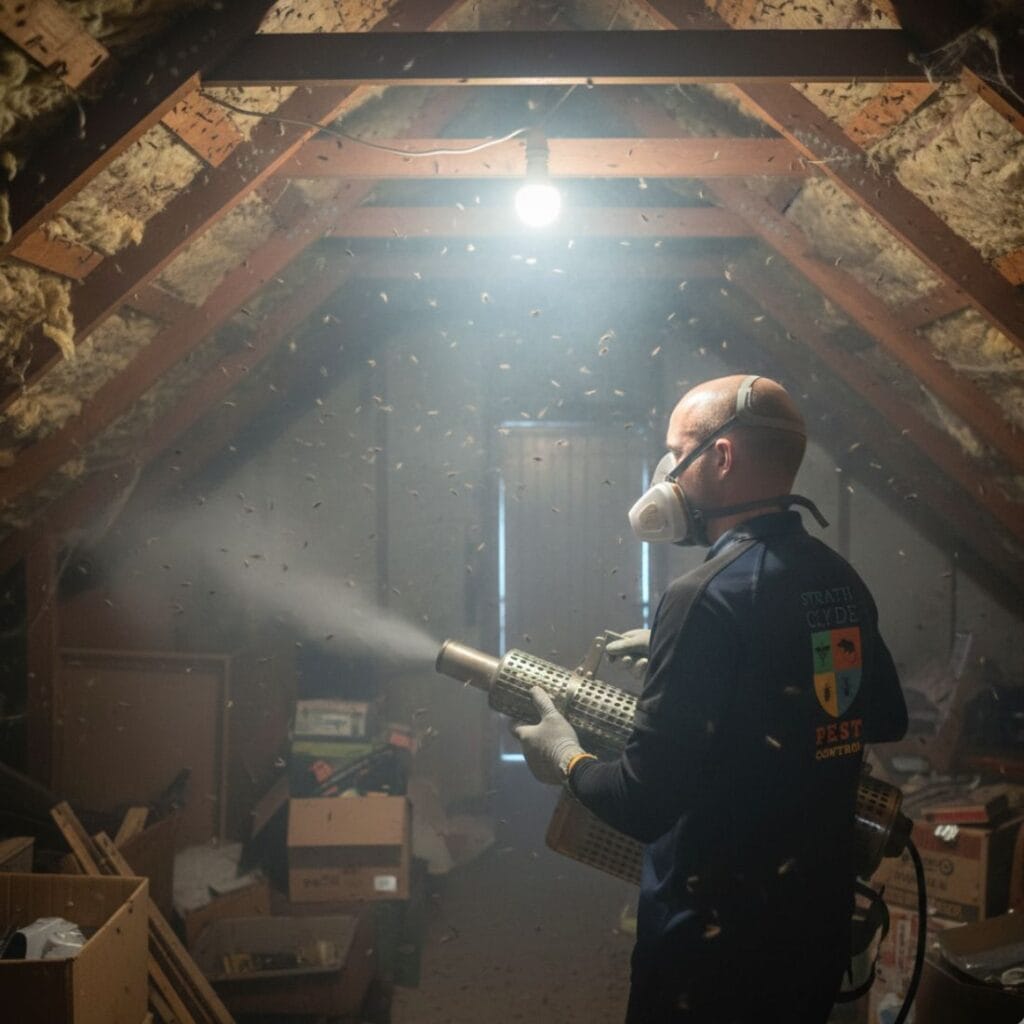

Flying Insects Control in Glasgow & East Kilbride
Flying insects getting into your home or workplace? We’ll find the source and sort it properly.
Why You Need Professional Flying Insects Control
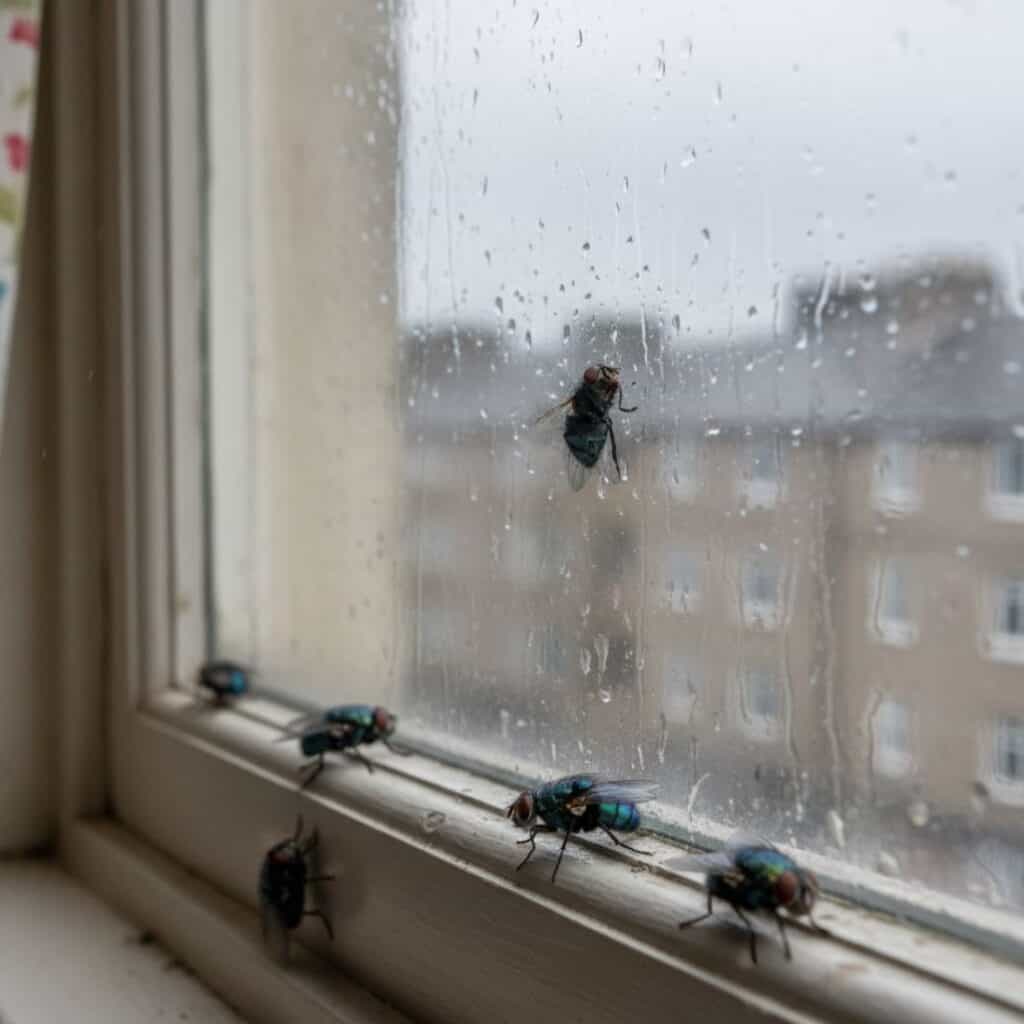
Flying insects might seem like more of a nuisance than a real problem, but once they settle in, they’re not easy to shift. In homes across Glasgow and East Kilbride, we regularly deal with cluster flies, fruit flies, drain flies and bluebottles. Each behaves differently. Some are seasonal. Some breed inside. Some are a sign of a deeper issue.
Cluster flies often gather in loft spaces and wall cavities, especially as temperatures drop. You’ll suddenly see them appearing at windows even though you’ve no idea how they got in. Fruit flies breed rapidly around food waste or spillages. Drain flies develop inside pipework. Bluebottles can indicate something more serious such as a dead rodent in a cavity or loft space.
There are health concerns too. Flies carry bacteria from waste and contaminated areas straight onto food surfaces, worktops and packaging. In a business setting, especially food premises, that can quickly become a hygiene issue.
DIY sprays rarely solve it because they only deal with the visible insects. They do nothing about breeding sites, entry points or hidden sources. That’s why problems often return within days. Early action matters. The sooner the source is identified, the easier it is to control.
- Frequent flies gathering at windows, especially on warmer days.
- Small flies hovering around sinks or plugholes. That’s often drain flies.
- Tiny flies around fruit bowls or bins. Fruit flies multiply fast and are usually linked to food residue.
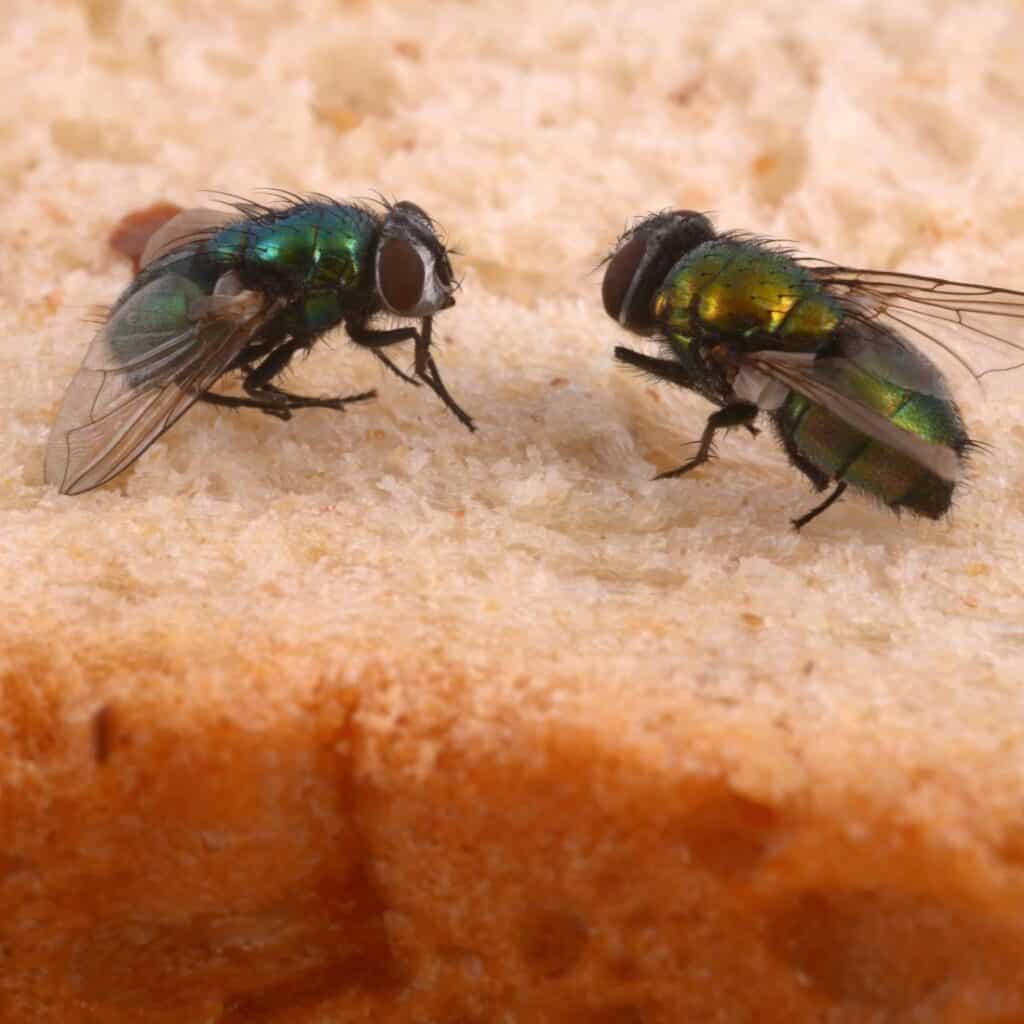
- Larger noisy flies appearing suddenly in one area of the house. That can point to a breeding source nearby.
- In loft conversions or upper floors, you might see cluster flies emerging near light fittings or window frames in autumn and early spring.
If you’re swatting a few every day and they keep coming back, that’s when it’s worth getting it checked properly.
January and February
Generally quieter, though you may still see cluster flies emerging indoors on milder days.
March and April
Activity starts to increase. Early warmth can trigger flies that have overwintered inside walls or lofts.
May and June
Breeding season for many species. Fruit flies and drain flies become more common, especially in kitchens and commercial premises.
July and August
Peak nuisance period. Warm weather means higher activity outdoors and more chance of flies entering through open windows and doors.
September and October
Cluster flies begin looking for sheltered spaces to overwinter. This is when prevention around rooflines and entry points is most effective.
November and December
You may notice flies appearing indoors even though it’s cold outside. These are often cluster flies disturbed by heating.
Simple steps like keeping bins sealed, clearing food debris quickly and checking external vents can help. But when activity is persistent, it’s best to get it assessed.
We’re a local family run business. We cover Glasgow, East Kilbride and the surrounding areas every week. We know the type of properties here, from tenements to newer estates.
When it comes to flying insects, the key is identifying the source, not just treating what you see.
You should consider professional help if:
- The activity keeps returning after cleaning.
- You’re seeing flies during the daytime in large numbers.
- There’s concern about hygiene in a food business.
- You suspect there may be something in a cavity or loft space attracting them.
We use targeted treatments suited to the specific species involved. No overuse of chemicals. No unnecessary disruption.
For commercial premises, we can also advise on monitoring and ongoing control where needed.
If you’re noticing repeat activity or you’re simply fed up chasing flies round the house, it’s worth getting proper advice.